Too much information kills information
Every year-end, it's the same ritual.
"Marketing trends" rain down. LinkedIn slides. "Top 10" articles. Predictions of varying degrees of inspiration. Everyone talks. Few really listen.
The problem isn't a lack of information, it's an excess of misinterpreted weak signals. AI everywhere. Influence again. The end of cookies. GEO. Synthetic data. Authenticity. Communities. CDP, then no more CDP.
Taken separately, each topic is interesting. Taken together, they paint a picture of a much more profound transformation than most articles suggest.
We took the opposite approach: we read a lot, then cross-referenced sources and eliminated the noise to keep only what comes back, what stands the test of time, what should structure your 2026 starts.
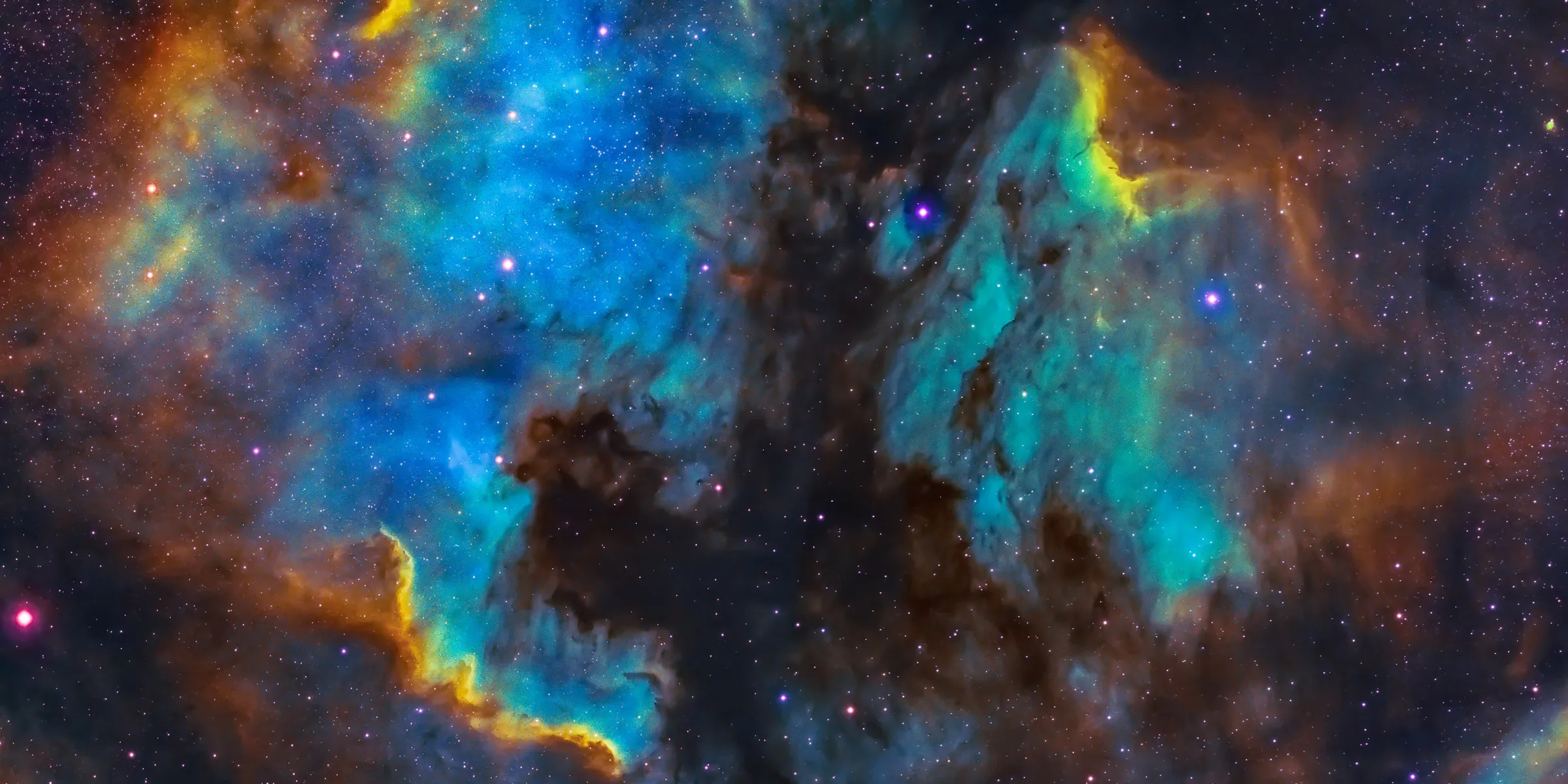
Here is a summary of our intergalactic journeys through the nebulae of 2026 predictions. And this is not a list of trends, but a strategic reading of digital marketing as it is being redefined in 2026.
Tendance #1 : la donnée change de nature : de la traque à la modélisation
Traditional digital marketing is based on a model that is now flawed:
- Fragmented tracking,
- incomplete data,
- increasing regulatory constraints,
- increasingly opaque platforms.
The articles agree on one point: perfect data no longer exists.
At the same time, one concept keeps coming up: synthetic data. Not as a gimmick, but as a paradigm shift. And this shift is structural. For years, marketing has functioned like a surveillance camera: observing, tracking, attributing, optimizing.
In 2026, this logic is replaced by another: understand, model, predict. Synthetic data does not seek to reproduce individual reality, but to simulate plausible behaviors, fill in blind spots, and enrich decision-making models. We are moving from exhaustive data to representative data, from the observed past to the probable future, from reporting to projection.
This is a major shift: marketing is becoming less dependent on "who did what" and more focused on "what really works".
What exactly do we do?
- We accept that data is imperfect.
- We work with augmented models rather than certainties.
- We reconnect data to strategy, not just short-term performance.
In 2026, brands that wait for perfect data to make decisions will still be behind.
Trend #2: Marketing no longer speaks only to humans
The consensus
A subtle but fundamental shift runs through all analyses: decisions are no longer made solely by people. Conversational AI, generative engines, assistants, purchasing agents... They filter, synthesize, and recommend.
SEO is evolving. Local is evolving. Visibility is becoming as much a question of machine comprehension as it is of human appeal.
Ce que beaucoup sous-estiment
Until now, marketing has sought to capture attention. Tomorrow, it will have to exist in automated decision-making systems. If an AI doesn't understand your proposal, can't summarize it, and can't compare it, then your brand won't even be part of the conversation. This is where GEO (Generative Engine Optimization) comes into its own, not as a "new SEO," but as an ability to be intelligible to machines.
The real issue
Marketing content is becoming more structured, more explicit, and must be more consistent over time. Creativity remains essential, but incomprehensible creativity is now invisible.
Trend #3: The era of Noise Marketing is over
What the numbers say
Influencer budgets are increasing, but tolerance for shallow content is decreasing. One fact keeps coming up: only a minority of creative content truly expresses the brand.
Commitment alone is no longer enough. Reach no longer protects. Performance must be demonstrable.
What this reveals
Marketing has confused visibility with value, and platforms are correcting this themselves.
In 2026, what will work:
- sustainable creative platforms,
- coherent narratives,
- long-term partnerships with creators.
We are moving from "one-shot buzz" to continuous narrative construction.
The change in posture
Content is no longer an end in itself; it must become a link in a communication system. Content without a clear strategic role is simply... well-produced noise.
Trend #4: Trust becomes the real currency of social media
The shared observation
Audiences are skeptical. They filter. They tire. Brands talk too much, look too similar, control too much. Competitors analyze each other too much, copy each other too much. The result: declining credibility, migration to more closed spaces, and a search for more authentic conversations.
What clearly emerges are micro-communities, areas of passion, closed or semi-closed platforms, and conversations that are less visible but more credible.
Discord is not a fad. It is a symptom: that of a need for less transactional relationships.
The real risk
Brands that still try to control everything risk, above all, losing credibility. In 2026, trust will be earned through consistency, not frequency.
Trend #5: Marketing is becoming an intelligent system of continuous engagement
Convergence of analyses
The most forward-looking articles are clear: the future of marketing does not lie in yet another tool, but in the intelligent orchestration of the whole. Traditional CDPs, which are cumbersome and centralized, are showing their limitations. In their place, more flexible solutions are emerging: distributed, interoperable, AI-driven, decision- and activation-oriented.
What fundamentally changes
AI no longer just analyzes. It arbitrates: what message should be broadcast, on which channel and at what time, but also in what format.
Advertising is becoming conversational.
The message is no longer fixed.
It adapts to the context, the intention, and the exchange.
Marketing is no longer a series of campaigns; it is becoming an adaptive system.
Bad ideas to abandon in 2026
- “We’re going to use AI everywhere.”
- “You have to be present on all networks.”
- “More content = more impact.”
- “A good creative can save a bad strategy.”
- “ROI can only be measured in the short term.”
Spoiler alert: no.
Conclusion
Marketing in 2026 will not be any easier. It will be more demanding.
Less noise. More structure.
Fewer blows. More systems.
If you want to turn these trends into a concrete, coherent, and actionable strategy, let's talk.
Sources & lectures
- https://www.forbes.com/sites/bernardmarr/2025/11/19/the-8-data-trends-that-will-define-2026/
- https://www.kantar.com/campaigns/marketing-trends
- https://www.blogdumoderateur.com/
- https://www.brandwatch.com/fr/reports/barometre-tendances-social-media/view/
- https://www.redpointglobal.com/blog/2026-predictions-part-ii-trends-that-will-redefine-customer-engagement/
- https://www.mntd.fr/2025/12/mort-des-cdp-geo-et-publicites-interactives-les-tendances-2026-vues-par-weborama/
- https://cloudtweaks.com/2025/12/year-intelligent-customer-data-platform/
- https://www.searchenginejournal.com/top-10-digital-marketing-trends/558503/
- Vincent Jeunejean